
Continuous chemical equipment
provider
provider


In the field of modern mineral resource development, the reserves of high-grade primary mineral resources continue to decline. Low-grade ores, tailings, and secondary recycled resources have gradually become the primary raw materials for the metallurgical industry. Traditional pyrometallurgy is plagued by high energy consumption, severe pollution, and low resource utilization efficiency, making it difficult to adapt to the green and low-carbon development trend of the industry. Featuring low energy consumption, strong process adaptability, high metal recovery rate, and controllable environmental impacts, hydrometallurgy has become the mainstream technology for non-ferrous metal extraction. The entire hydrometallurgical process consists of interconnected procedures including leaching, extraction, stripping, enrichment, and purification. The extraction process directly determines the separation purity of metals and the quality of final products. As the core equipment for the extraction procedure, mixer-settler tanks exert a decisive influence on the production capacity, operational cost, and product qualification rate of the entire hydrometallurgical production line due to their stable operation and efficient separation and processing capabilities. This paper conducts an in-depth analysis of the functional positioning, process value, application advantages, and industrial adaptability of mixer-settler tanks in full-scale hydrometallurgical workflows, clarifying their irreplaceable core value in efficient metal extraction.
After acid leaching or alkaline leaching, raw ores produce leachate containing various metal ions with complex compositions and numerous impurities, which cannot be directly processed to manufacture high-purity metal products. The core principle of the extraction process is to realize the separation and enrichment of target metals from impurity ions through the selective binding of organic extractants with target metal ions in the aqueous phase. In this process, mixer-settler tanks serve as the pivotal equipment that enables sufficient mixing and mass transfer exchange between organic and aqueous phases.
Relying on optimized internal structures, including specialized stirring, mixing, and settling zones, mixer-settler tanks facilitate full contact between extractants and leachate, maximizing the mass transfer efficiency of target metal ions and realizing the transfer of target metals from the aqueous phase to the organic phase. Compared with other extraction equipment, mixer-settler tanks are well-suited for large-flow and continuous hydrometallurgical production. They can stably process high-volume leachate and sustain efficient mass transfer, providing qualified enriched organic phases for subsequent stripping, electrowinning, and smelting purification. They are the fundamental operational carrier for standardized and efficient extraction procedures.
Hydrometallurgical leachate generally contains a variety of associated metallic and non-metallic impurity ions. Unremoved impurities will directly reduce the purity of finished metal products, lower market competitiveness, and even result in unusable production waste. Equipped with a stable two-phase stratification and separation system, mixer-settler tanks support the directional enrichment of target metals and accurate interception of impurity ions.
In the hydrometallurgical extraction of nickel, cobalt, copper, vanadium, lithium, and other non-ferrous metals, multi-stage series-connected mixer-settler tanks can separate different metal elements step by step and remove impurity ions such as calcium, magnesium, iron, and aluminum progressively. The professionally designed settling section enables rapid stratification of organic and aqueous phases, preventing impurities from entering subsequent production links with the organic phase. This significantly improves metal separation accuracy, ensures that finished products such as high-purity metal salts and electrolytic metals meet industrial standards, reduces defective product rates, and strengthens the core competitiveness of metallurgical enterprises.
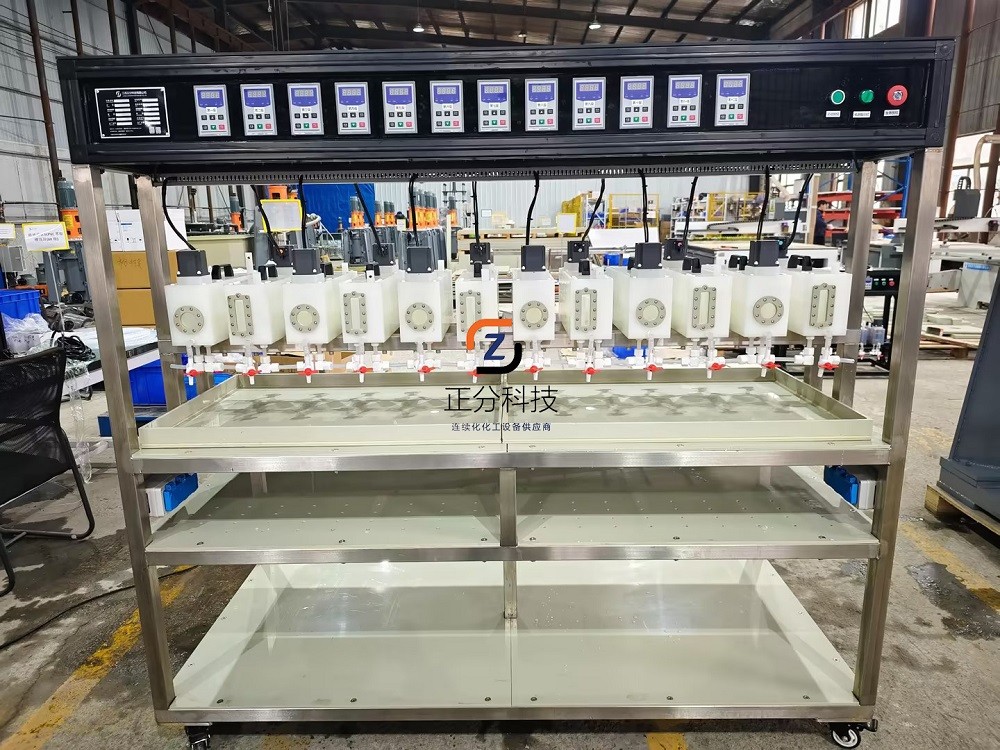
Modern hydrometallurgical production lines adopt continuous and large-scale operation modes, which impose strict requirements on equipment operational stability, processing capacity, and resistance to working condition fluctuations. With modular and tank-type structural characteristics, mixer-settler tanks can be flexibly assembled into multi-stage series configurations according to production capacity demands, adapting to production scales ranging from small and medium-sized mines to large-scale resource bases and supporting continuous leachate extraction and discharging.
Featuring robust structural design and moderate energy consumption, these tanks can operate stably for a long time under harsh working conditions, including high temperature, acidity, and corrosive leachate environments. Their excellent acid and alkali corrosion resistance minimizes equipment shutdown and maintenance frequency. By maintaining consistent and continuous operational efficiency, mixer-settler tanks eliminate production bottlenecks in the extraction stage, improve the overall processing capacity and operational efficiency of the production line, support efficient development and utilization of mineral resources, and reduce the unit production cost of metal extraction.
A core challenge facing the modern metallurgical industry is the low extraction efficiency and metal recovery rate of low-grade ores, tailings, and recycled resources, leading to the waste of numerous available metal elements due to technical limitations. Benefiting from high-efficiency separation performance, mixer-settler tanks can deeply enrich target metal ions in low-concentration leachate, greatly improving metal recovery efficiency and enabling the resource utilization of low-grade ores, tailings, and secondary recycled resources.
In application scenarios such as salt lake lithium extraction, laterite nickel ore processing, acidic vanadium extraction, and lithium battery recycling hydrometallurgy, multi-stage enrichment with mixer-settler tanks can concentrate low-concentration metal ions into high-purity organic phases, turning previously unexploitable mineral resources into economically viable raw materials. This approach expands mineral resource sources, reduces resource waste, complies with national industrial policies for circular economy and comprehensive resource utilization, and helps enterprises improve resource utilization efficiency and diversify raw material supply channels.
Green low-carbon development and clean production have become the core transformation directions of the global metallurgical industry. Compared with pyrometallurgy, which generates massive waste gas and residue, hydrometallurgy features controllable pollution and centralized discharge with prominent environmental advantages. In hydrometallurgical workflows, mixer-settler tanks support the cyclic reuse of organic extractants. The stable phase separation system effectively reduces extractant loss, lowering chemical reagent costs and hazardous waste generation.
In addition, the closed structural design of mixer-settler tanks inhibits the overflow of volatile substances. All leachate and organic phases are processed in a fully enclosed internal circulation system, allowing centralized collection and treatment of waste liquid. This design facilitates standardized wastewater treatment and reagent recycling, helping enterprises meet environmental supervision requirements, achieve green and clean production, avoid environmental compliance risks, and adapt to the sustainable development trends of the metallurgical industry.
As essential process equipment covering core extraction procedures, mixer-settler tanks serve multiple critical functions in hydrometallurgy: supporting basic liquid-liquid mass transfer, guaranteeing high-precision impurity separation, underpinning large-scale continuous production, enabling efficient recovery of low-grade mineral resources, and promoting green production. They play a decisive role in determining metal extraction efficiency, finished product quality, production costs, and overall resource utilization rate. As mineral resource development evolves toward refinement, high efficiency, and greenization, the structural optimization and performance upgrading of mixer-settler tanks will continue to drive technological iteration in non-ferrous metal extraction, acting as indispensable core equipment for the high-quality development of the modern hydrometallurgical industry.
Focus on being Continuous chemical equipment
provider.
If you want to learn more about our centrifugal extractor, mixer settler, Contact us Now