
Continuous chemical equipment
provider
provider


In industrial liquid-liquid extraction processes—critical for sectors like hydrometallurgy, fine chemicals, environmental wastewater treatment, and pharmaceutical intermediate purification—operators consistently face core pain points: inefficient phase separation, unstable product purity, high energy consumption, large space requirements, and poor adaptability to complex feed systems (such as low density difference, high viscosity, or emulsification-prone solutions). The selection and proper operation of extraction equipment directly determine production efficiency, comprehensive costs, and process scalability. Centrifugal extractors, mixer-settlers, and extraction towers are the three most widely used types of equipment, but their operational characteristics, control requirements, and applicability vary drastically due to differences in driving force, mass transfer mode, and structural design. This article breaks down their key operational differences, addresses common industry challenges, and provides actionable insights to help enterprises optimize equipment selection, reduce operational risks, and improve process economics—filling the gap between theoretical equipment parameters and on-site operational practice.
The root of operational differences between these three types of equipment lies in the driving force used for phase separation, which directly dictates their operational logic, process flow, and response to feed variations. Understanding this distinction is the first step to mastering their on-site operation.
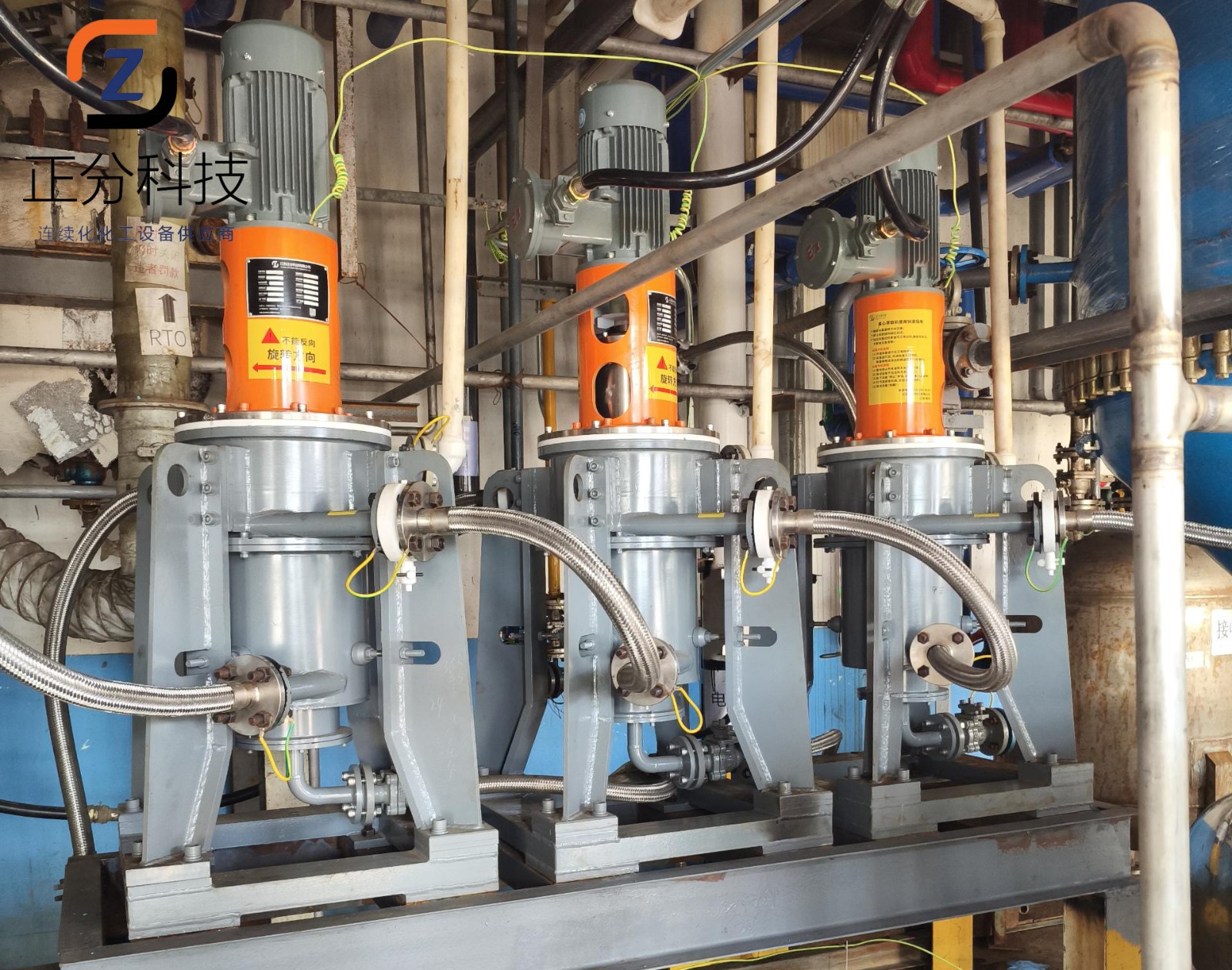
Centrifugal extractors rely on high-speed rotating drums to generate centrifugal force—hundreds to thousands of times greater than gravity—to achieve rapid phase separation of the two liquid phases after mass transfer. Operation follows a highly integrated, continuous logic: the aqueous and organic phases are pumped into a dedicated mixing chamber at a preset ratio, where they undergo intense shear mixing to complete mass transfer (typically taking just seconds). The mixture then enters the rotating drum’s clarification zone, where the denser heavy phase is pushed outward toward the drum wall, while the lighter light phase converges toward the center. Both phases are continuously discharged through separate outlets, with an overall material residence time of only 10–30 seconds. On-site operation focuses on "dynamic balance control": slight adjustments to drum speed or feed flow ratio can quickly adapt to changes in feed concentration or density difference, making it highly responsive to process fluctuations.
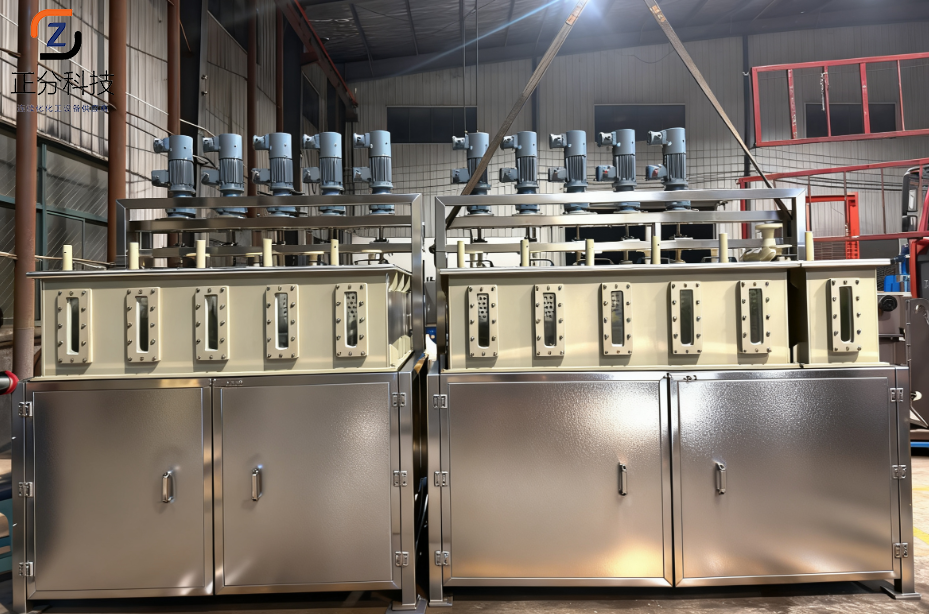
Mixer-settlers are classic stage-type extractors that rely solely on gravity for phase separation, consisting of a series of cascaded mixing chambers and settling chambers (typically with a mixer-to-settler volume ratio of 1:2.5 for rare earth applications). Operation is inherently batch or semi-continuous: in each mixing chamber, an impeller shears and mixes the two phases to facilitate mass transfer, and the mixture then flows into the adjacent settling chamber through an overflow baffle. Here, the two phases separate naturally due to their density difference—a process that often takes minutes to hours, significantly longer than the mixing stage. Operational logic centers on "static separation guarantee": operators must strictly control mixing intensity (avoiding over-mixing that causes emulsification or under-mixing that reduces mass transfer efficiency) and settling time, as any disturbance to the settling chamber can lead to phase entrainment and reduced separation efficiency.
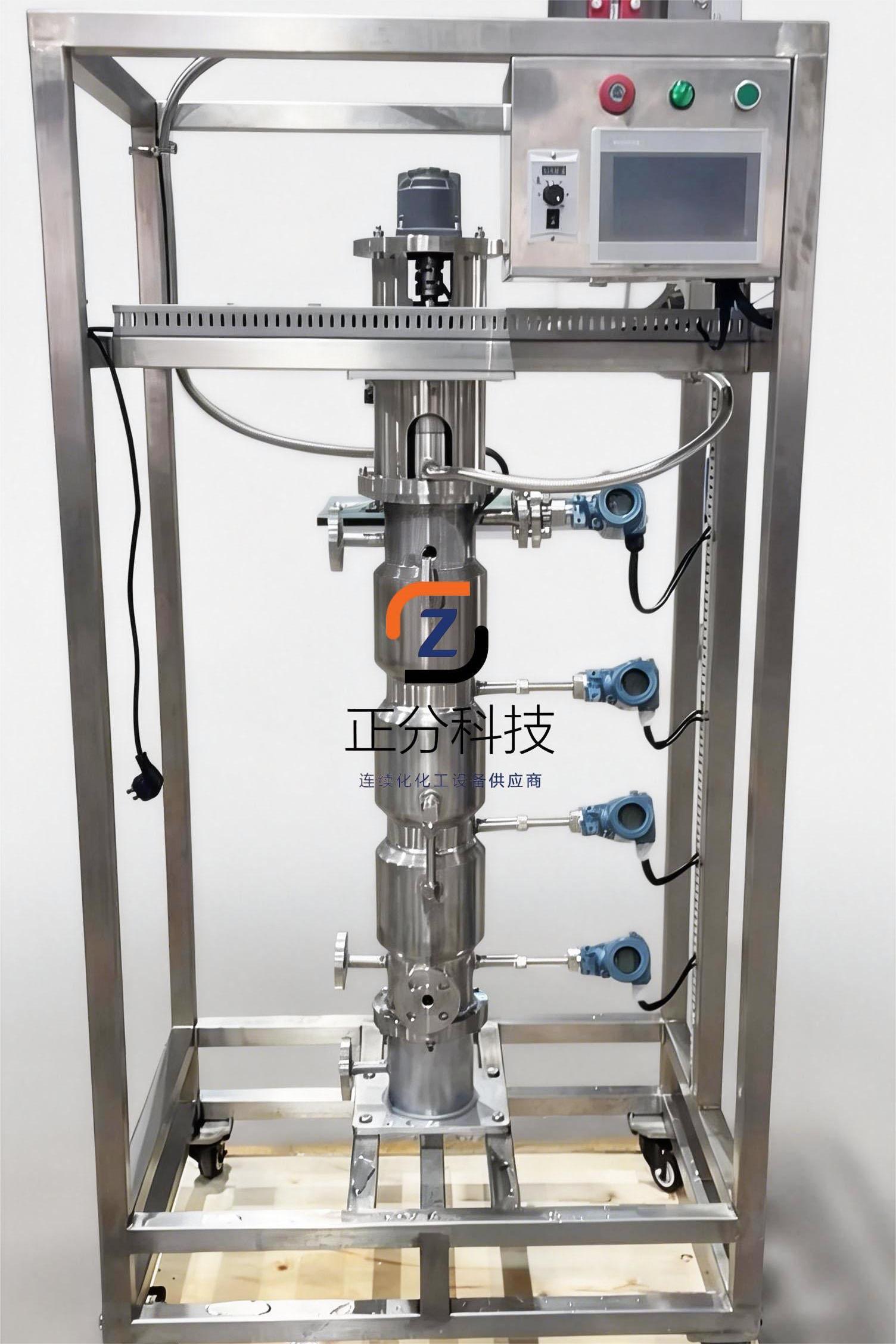
Extraction towers (including packed towers, pulse towers, and rotating disc contactors) are vertical, differential contact extractors that use gravity or pressure to drive countercurrent contact between the two phases. The operational flow is continuous but distinct from centrifugal extractors: the light phase enters from the bottom of the tower and overflows from the top, while the heavy phase enters from the top and exits from the bottom. As the two phases flow countercurrently, they come into contact through internal components (packing, trays, or rotating discs) to complete gradual mass transfer, with a continuous concentration gradient along the tower height. Operational focus is on "countercurrent mass transfer and backmixing control": maintaining stable liquid levels and feed flow rates is critical, as excessive flow rates can cause flooding (a common operational failure), while insufficient control over backmixing (axial or radial mixing of the same phase) reduces mass transfer efficiency and separation precision.
The number, controllability, and adjustment sensitivity of operational parameters directly determine the equipment’s learning curve, operational stability, and on-site maintenance requirements. For plant operators, mastering these parameters is essential to avoiding process failures and ensuring consistent performance.
The core operational parameters of centrifugal extractors are limited but highly sensitive: drum speed, feed flow ratio (aqueous to organic phase), and mixing intensity. Drum speed is the most critical parameter—even a small adjustment (5–10% change) can drastically alter the centrifugal force, affecting phase separation efficiency and potentially causing emulsification if set too high (due to excessive droplet breakage). Feed flow ratio must be precisely matched to the system’s mass transfer requirements, as deviations can lead to incomplete extraction or phase entrainment. On-site control requires real-time monitoring of phase interface positions and discharge clarity, with most modern units equipped with automated control systems to adjust speed and flow rates dynamically. The main operational challenge is avoiding mechanical issues: high-speed rotating components require regular checks for seal wear and drum imbalance, which can cause excessive vibration and equipment damage.
Mixer-settlers have three core operational parameters: impeller rotation speed (mixing intensity), settling time, and phase interface height. Unlike centrifugal extractors, these parameters have low sensitivity—adjusting impeller speed or feed rate does not yield immediate changes in separation results, as the settling process requires time to reach equilibrium. Control is relatively simple: operators set the impeller speed based on the feed system’s viscosity and density difference, and monitor the phase interface height in the settling chamber to ensure proper discharge (too high a height leads to heavy phase entrainment in the light phase, and vice versa). The main challenge is batch-to-batch consistency: in semi-continuous operation, feed concentration or flow rate variations require adjustments to mixing time or settling time, which are cumbersome and prone to human error. Additionally, cleaning the settling chamber (to remove accumulated sediments) is a regular, labor-intensive task.
Extraction towers have more operational parameters than the other two types, including feed flow rate (heavy and light phases), tower internal liquid level, pulse frequency (for pulse towers), or rotating disc speed (for rotating disc contactors). Feed flow rate and liquid level are interrelated: increasing flow rate can improve throughput but increases the risk of flooding, while maintaining a stable liquid level ensures consistent countercurrent contact. For pulse towers, pulse frequency controls mixing intensity and mass transfer efficiency—too high a frequency causes emulsification, while too low reduces interfacial contact area. The key operational difficulty is suppressing backmixing: internal components (e.g., packing or trays) are designed to minimize backmixing, but on-site adjustments (such as replacing packing or adjusting tray spacing) are complex and require shutdowns. Unlike centrifugal extractors, extraction towers have a longer response time to parameter adjustments—changes in flow rate or pulse frequency may take 10–30 minutes to stabilize, requiring operators to make gradual, incremental adjustments.
Industrial extraction processes often involve complex feed systems, such as high viscosity, low density difference (Δρ < 0.05 g/cm³), high solid content, or thermosensitive materials. The three types of equipment vary significantly in their adaptability to these conditions, which is a key factor in equipment selection for specific industries.
Centrifugal extractors excel in handling complex feed systems thanks to their strong centrifugal force. They can efficiently process systems with density differences as low as 0.03 g/cm³ and effectively suppress emulsification—eliminating the need for additional demulsifiers and reducing operational costs. Their short material residence time (seconds) makes them ideal for thermosensitive materials (e.g., pharmaceutical intermediates or bioactive compounds), as it minimizes thermal degradation. However, they have strict requirements for feed solid content: the solid content must be less than 5% (preferably less than 1%), as high solid content can cause drum wear, blockage, and reduced separation efficiency—requiring a pre-filtration step in solid-laden applications (e.g., hydrometallurgy slag leachates).
Mixer-settlers are highly adaptable to high solid content feeds, capable of handling slurries with up to 20% solid content (e.g., vanadium ore slag leachates) due to their simple structure and lack of easily clogged components. They also perform well in systems requiring long reaction times during mixing (e.g., complex chelation reactions in hydrometallurgy). However, their reliance on gravity makes them poorly suited for low density difference or emulsification-prone systems—separation becomes incomplete, leading to high solvent loss (often exceeding 5%) and reduced product purity. They are also not ideal for thermosensitive materials, as the long residence time (minutes to hours) increases the risk of material degradation.
Extraction towers are suitable for medium-throughput, conventional systems (density difference ≥ 0.05 g/cm³) with low viscosity and low solid content. Packed towers, in particular, offer good mass transfer efficiency for systems requiring precise separation (e.g., fine chemical purification). However, their adaptability is limited by internal components: high viscosity feeds increase flow resistance and reduce mass transfer efficiency; high solid content causes packing or tray clogging, requiring frequent shutdowns for cleaning; and low density difference systems are prone to flooding and backmixing, reducing separation precision. They are also not recommended for thermosensitive materials, as residence time (hours) is significantly longer than centrifugal extractors.
Long-term operational costs—including maintenance, energy consumption, and labor—are critical for enterprise profitability. The three types of equipment differ significantly in their maintenance requirements, safety risks, and energy efficiency, which directly impact their total cost of ownership.
Centrifugal extractors have a higher initial investment due to their precision mechanical design, but their fully continuous operation reduces labor costs—requiring only 1–2 operators per unit for monitoring and routine checks. Energy consumption is moderate: while high-speed rotation requires electricity, their compact design and high single-stage efficiency (90–95%) reduce the need for multi-stage cascading, resulting in lower overall energy consumption than multi-stage mixer-settlers. Maintenance focuses on critical components: regular inspection and replacement of seals (to prevent leakage) and drum balancing (to avoid vibration). While maintenance costs are higher than mixer-settlers, modular design allows for quick component replacement, minimizing downtime (typically a few hours per maintenance cycle).
Mixer-settlers have the lowest initial investment among the three types, with a simple structure (no precision rotating components) that makes them easy to manufacture and install. However, their batch or semi-continuous operation requires more labor—operators must monitor each mixing and settling stage, adjust feed rates manually, and clean settling chambers regularly. Energy consumption is high for large-scale applications: multi-stage cascading (required to achieve high extraction efficiency) increases energy use for impeller mixing, with electricity consumption per ton of raw material reaching up to 2800 kWh in some cases. Maintenance is minimal: routine checks of impeller wear and settling chamber cleanliness are sufficient, with low maintenance costs and no need for specialized technical personnel.
Extraction towers have a moderate initial investment, with costs varying by internal components (packed towers are cheaper than rotating disc contactors). Their continuous operation reduces labor costs, similar to centrifugal extractors. Energy consumption is low for conventional systems, as they rely on gravity for phase separation—no high-speed rotation is required. However, maintenance is a significant drawback: internal components (packing, trays) are prone to fouling and clogging, requiring regular shutdowns for cleaning or replacement. For example, pulse tower pulse devices have complex maintenance requirements, with downtime lasting several days per maintenance cycle. Additionally, tower height (often 10–20 meters) requires specialized access platforms for maintenance, increasing long-term operational costs.
Based on the operational differences outlined above, selecting the right equipment and optimizing its operation requires aligning with the specific needs of the industry, feed system, and production scale:
For high-throughput, continuous production with complex feed systems (low density difference, emulsification-prone, or thermosensitive materials) and limited plant space (e.g., pharmaceutical intermediates, nuclear fuel reprocessing, or modern hydrometallurgy), centrifugal extractors are the optimal choice. Ensure pre-filtration of feeds to control solid content below 1%, and invest in automated control systems to simplify parameter adjustment and reduce human error.
For small-to-medium scale production with high solid content feeds, batch operation requirements, or limited maintenance capabilities (e.g., traditional hydrometallurgy, small-scale chemical processing), mixer-settlers are preferred. Optimize the mixer-to-settler ratio and mixing intensity to balance mass transfer efficiency and settling performance, and implement regular cleaning schedules to avoid sediment accumulation.
For medium-throughput, conventional feed systems (stable density difference, low viscosity, low solid content) with sufficient plant height (e.g., fine chemical purification, routine wastewater treatment), extraction towers are suitable. Choose packed towers for improved mass transfer efficiency, and implement gradual parameter adjustments to avoid flooding and backmixing.
The operational differences between centrifugal extractors, mixer-settlers, and extraction towers stem from their distinct driving forces, structural designs, and mass transfer modes—translating to differences in control sensitivity, adaptability to complex conditions, maintenance requirements, and operational costs. Centrifugal extractors offer rapid, precise separation for complex systems but require careful parameter control and maintenance; mixer-settlers provide simple, low-cost operation for high solid content feeds but lack efficiency in challenging systems; extraction towers deliver continuous, low-energy operation for conventional systems but suffer from high maintenance downtime. By understanding these differences, industrial operators can avoid common operational pitfalls, optimize equipment performance, and align their extraction processes with production goals—ultimately reducing costs, improving product quality, and achieving sustainable operational efficiency in liquid-liquid extraction applications.
Focus on being Continuous chemical equipment
provider.
If you want to learn more about our centrifugal extractor, mixer settler, Contact us Now