
Continuous chemical equipment
provider
provider


The global demand for cobalt—an essential raw material for electric vehicle batteries, renewable energy storage, and advanced electronics—has surged in recent years, driving rapid growth in the cobalt hydrometallurgy industry. However, traditional reactors, long the backbone of cobalt extraction processes, are increasingly struggling to meet the industry’s evolving demands for efficiency, cost-effectiveness, and environmental compliance. Low cobalt recovery rates, high energy consumption, poor adaptability to complex feed materials, and cumbersome maintenance have become critical pain points, hindering scalability and profitability for mines and recycling facilities alike. This article explores how mixer-settler equipment, a specialized liquid-liquid extraction system, is emerging as a superior alternative to traditional reactors, addressing these core challenges while delivering consistent, scalable, and sustainable cobalt extraction. We break down the technical advantages, practical implementation considerations, and real-world benefits of this transition, providing actionable insights for industry professionals looking to optimize their cobalt extraction workflows.
Traditional reactors have been widely used in cobalt extraction for decades, primarily for leaching, precipitation, and initial separation processes. While they served the industry in its early stages, their inherent design flaws make them ill-suited for the high-volume, high-purity requirements of modern cobalt production—especially as sources shift to low-grade ores and recycled materials like spent lithium-ion batteries.
Cobalt extraction relies on precise contact between the aqueous feed (leachate containing cobalt ions) and organic extractant to separate cobalt from impurities like nickel, copper, and magnesium. Traditional reactors use batch or semi-batch mixing, which often results in inadequate phase contact. This incomplete mixing leads to low mass transfer efficiency, with cobalt recovery rates frequently dropping below 85%—a significant loss for operations processing low-grade ores or complex feedstocks. Unlike continuous processes, batch reactors also suffer from inconsistent reaction conditions, leading to variable product purity and increased waste.
Traditional reactors require intense mechanical agitation to mix phases, consuming large amounts of electricity—especially in large-scale operations. Additionally, their batch-based operation demands frequent loading, unloading, and cleaning, increasing labor costs and downtime. Maintenance is another major expense: reactors are prone to corrosion from acidic leachates, requiring regular replacement of liners and agitators, which further cuts into profitability. For facilities aiming to reduce operational costs and meet sustainability goals, these inefficiencies are increasingly unsustainable.
The growing shift toward low-grade cobalt ores (such as laterite nickel-cobalt ores) and recycled materials (spent EV batteries) has introduced feedstocks with higher impurity levels, varying viscosity, and suspended solids. Traditional reactors struggle to handle these complex feeds: suspended solids can cause clogging, while variable viscosity disrupts mixing uniformity. This leads to increased downtime for cleaning, reduced extraction precision, and difficulty meeting the strict purity standards for battery-grade cobalt (typically 99.9%+).
Many traditional reactors use open or semi-open designs, leading to the volatilization of organic extractants—a major environmental and safety concern. Extractant losses can reach 15-20% per cycle, increasing chemical costs and creating air and water pollution. Additionally, batch processing often results in inconsistent waste streams, making it harder to comply with increasingly strict environmental regulations for heavy metal emissions and wastewater discharge.
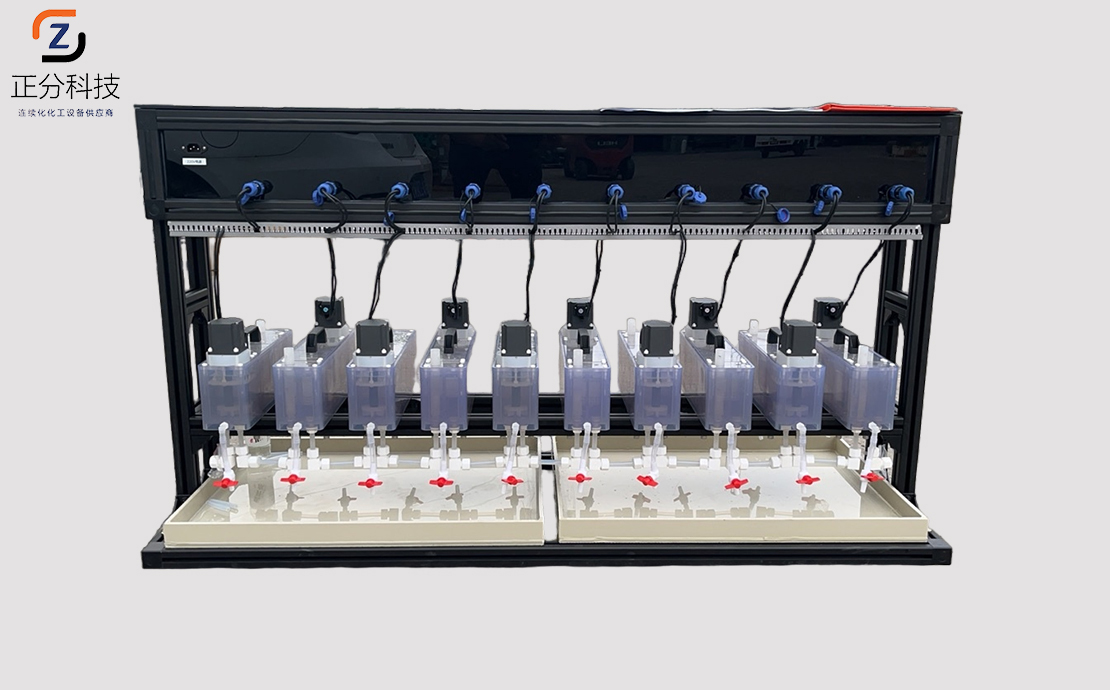
Mixer-settler equipment is a continuous liquid-liquid extraction system designed specifically for efficient phase separation and mass transfer—two critical requirements for cobalt extraction. Unlike traditional reactors, mixer-settlers consist of two integrated stages: a mixing chamber where the aqueous feed and organic extractant are thoroughly combined, and a settling chamber where the two phases separate by gravity. This design addresses all the key limitations of traditional reactors, making it the ideal choice for modern cobalt extraction operations.
One of the most significant advantages of mixer-settlers is their continuous operation. Unlike batch reactors, which require frequent interruptions for loading and unloading, mixer-settlers process feedstock continuously, ensuring consistent mixing and separation conditions. This results in higher mass transfer efficiency, with cobalt recovery rates typically exceeding 95%—a 10%+ improvement over traditional reactors. The continuous flow also eliminates variability in product quality, ensuring that cobalt purity meets battery-grade standards consistently.
Mixer-settlers are far more energy-efficient than traditional reactors. Their mixing chambers use optimized agitators that require less power to achieve thorough phase contact, reducing electricity consumption by 30-40% in most applications. Additionally, continuous operation minimizes labor costs, as fewer operators are needed to monitor and maintain the system. The design also reduces corrosion risks: modern mixer-settlers are constructed from corrosion-resistant materials (such as 316L stainless steel, PP, or PTFE), extending equipment lifespan and cutting maintenance costs by up to 40%.
Mixer-settlers are engineered to handle the most challenging cobalt feedstocks, including low-grade ores, spent batteries, and high-impurity leachates. The mixing chamber’s adjustable agitator speed allows operators to optimize mixing intensity for different feed viscosities, while the settling chamber’s coalescence plates facilitate efficient phase separation even in the presence of suspended solids. This adaptability eliminates clogging and downtime, ensuring consistent performance regardless of feed composition—a critical advantage as the industry shifts to more complex raw materials.
Modern mixer-settlers feature closed-loop designs that minimize extractant volatilization, reducing losses to less than 5% and eliminating air pollution risks. The closed system also simplifies wastewater management, as the separated aqueous phase (raffinate) can be treated and recycled, reducing water consumption and environmental impact. Additionally, the continuous flow design reduces the risk of chemical spills, improving workplace safety for operators.
While mixer-settlers offer clear advantages, transitioning from traditional reactors requires careful planning to ensure a smooth integration into existing workflows. Below are key considerations for industry professionals looking to make the switch.
Mixer-settlers are highly scalable, making them suitable for both small-scale pilot operations and large-scale industrial facilities. When transitioning, operators should optimize key parameters such as phase flow ratio (organic to aqueous), mixing speed, and residence time to match their specific feedstock and extraction goals. For example, low-grade cobalt feeds may require multiple stages of mixer-settlers in a counter-current configuration to achieve optimal recovery rates. Working with equipment manufacturers to customize the system for your specific needs is critical to maximizing performance.
Choosing the right mixer-settler design and materials is essential for long-term reliability. For acidic leachates (common in cobalt extraction), corrosion-resistant materials like PP or PTFE are recommended to prevent equipment degradation. Additionally, the size of the mixing and settling chambers should be matched to your production volume—undersized systems will lead to bottlenecks, while oversized systems will waste energy and space. It’s also important to select a system with adjustable agitators and coalescence plates to accommodate future changes in feed composition.
While mixer-settlers are easier to maintain than traditional reactors, operators still require training to monitor and optimize the system. Key skills include adjusting flow rates, monitoring phase separation, and troubleshooting common issues (such as emulsion formation). Establishing a regular maintenance schedule—including cleaning coalescence plates, inspecting agitators, and checking for leaks—is critical to ensuring consistent performance and extending equipment lifespan.
The benefits of mixer-settlers are not theoretical—they have been proven in real-world cobalt extraction operations. For example, a large-scale nickel-cobalt mine in Southeast Asia recently replaced its traditional batch reactors with a 4-stage counter-current mixer-settler system. The transition resulted in a 12% increase in cobalt recovery (from 83% to 95%), a 35% reduction in energy consumption, and a 40% decrease in maintenance costs. The mine also reported a 90% reduction in extractant losses, significantly improving environmental compliance and reducing chemical costs.
In the spent battery recycling sector, a European facility implemented a mixer-settler system to extract cobalt from lithium-ion battery leachates. The system’s ability to handle high-impurity feeds allowed the facility to process a wider range of battery types, while continuous operation increased throughput by 50% compared to traditional reactors. The facility also achieved battery-grade cobalt purity (99.95%) consistently, opening up new market opportunities for its recycled materials.
As the global demand for cobalt continues to grow, traditional reactors are no longer able to keep pace with the industry’s need for efficiency, scalability, and sustainability. Mixer-settler equipment offers a proven, cost-effective alternative, addressing the core pain points of traditional extraction processes—low recovery rates, high energy consumption, poor adaptability, and environmental risks. By enabling continuous operation, superior phase contact, and enhanced adaptability to complex feedstocks, mixer-settlers are transforming cobalt extraction, helping operations reduce costs, improve product quality, and meet increasingly strict environmental regulations.
For mining and recycling facilities looking to stay competitive in the evolving cobalt market, transitioning to mixer-settler technology is not just an upgrade—it’s a strategic investment in long-term profitability and sustainability. With the right planning, equipment selection, and operator training, mixer-settlers can deliver significant returns, positioning your operation for success in the growing global cobalt industry.
Focus on being Continuous chemical equipment
provider.
If you want to learn more about our centrifugal extractor, mixer settler, Contact us Now