
Continuous chemical equipment
provider
provider


In the production processes of electroplating, semiconductor manufacturing, PCB etching, hardware processing, and other industries, the discharge and treatment of copper nitrate wastewater remain core challenges for enterprises. This type of wastewater contains high concentrations of copper ions and nitrate impurities; direct discharge not only results in the severe waste of copper resources but also triggers environmental issues such as water pollution and excessive soil heavy metals, putting enterprises at risk of severe environmental penalties. Traditional copper extraction processes either suffer from low extraction rates and insufficient resource recovery or high operation and maintenance costs with degraded performance of regenerated chemicals, failing to balance environmental compliance and economic benefits. This article focuses on the application of mixing-settling tanks in copper extraction from copper nitrate wastewater, comprehensively analyzing how this technology addresses industry pain points from the perspectives of process principles, practical operation procedures, core advantages, industry adaptability, and common problem solutions. It provides enterprises with efficient, energy-saving, and compliant copper extraction solutions, helping the industry achieve green transformation and resource recycling.
Currently, enterprises in the field of copper extraction from copper nitrate wastewater generally face three core pain points. With its unique process characteristics, the mixing-settling tank has become the preferred technology to effectively address these challenges and an inevitable requirement for industrial technological upgrading.
Pain Point 1: Severe Resource Waste and Low Copper Extraction Efficiency. Traditional processes such as chemical precipitation achieve a copper extraction rate of only 70%-80%, leading to the loss of large amounts of copper ions in discharged wastewater. For PCB and electroplating enterprises that generate thousands of tons of copper nitrate wastewater annually, the value of lost copper resources can reach millions of yuan each year. Additionally, these enterprises incur high costs for wastewater transfer and disposal, creating a "double cost" burden. Test data from a leading PCB enterprise shows that the annual loss of copper resources alone exceeds 3 million yuan when traditional processes are used to treat copper nitrate wastewater.
Pain Point 2: High Environmental Compliance Pressure and Disposal Risks. Copper nitrate wastewater is classified as hazardous waste, containing high concentrations of copper ions and acidic substances. Improper treatment can lead to water pollution due to residual nitrates and heavy metal ions, putting enterprises at risk of violating environmental regulations and facing heavy penalties. Furthermore, traditional processes tend to produce copper-containing sludge, which requires costly secondary treatment, further increasing enterprises’ environmental burdens.
Pain Point 3: High Operation and Maintenance Costs and Disrupted Production Continuity. The performance of regenerated chemicals in some copper extraction technologies degrades significantly, with etching speeds decreasing by 15%-20% compared to fresh chemicals. This leads to higher product defect rates and rework costs. Meanwhile, traditional equipment is prone to corrosion and requires complex maintenance, including frequent crystal cleaning and equipment overhauls. This not only increases labor costs but also disrupts production rhythms and delays order delivery.
In response to these pain points, the mixing-settling tank copper extraction technology—with its core advantages of efficient separation, high resource recovery, convenient operation and maintenance, and an environmental closed-loop—can achieve the dual goals of efficient copper resource recovery and compliant wastewater discharge. It perfectly aligns with enterprises’ core needs of "cost reduction, compliance, and efficiency improvement" and has become the mainstream technical path for copper extraction from copper nitrate wastewater.
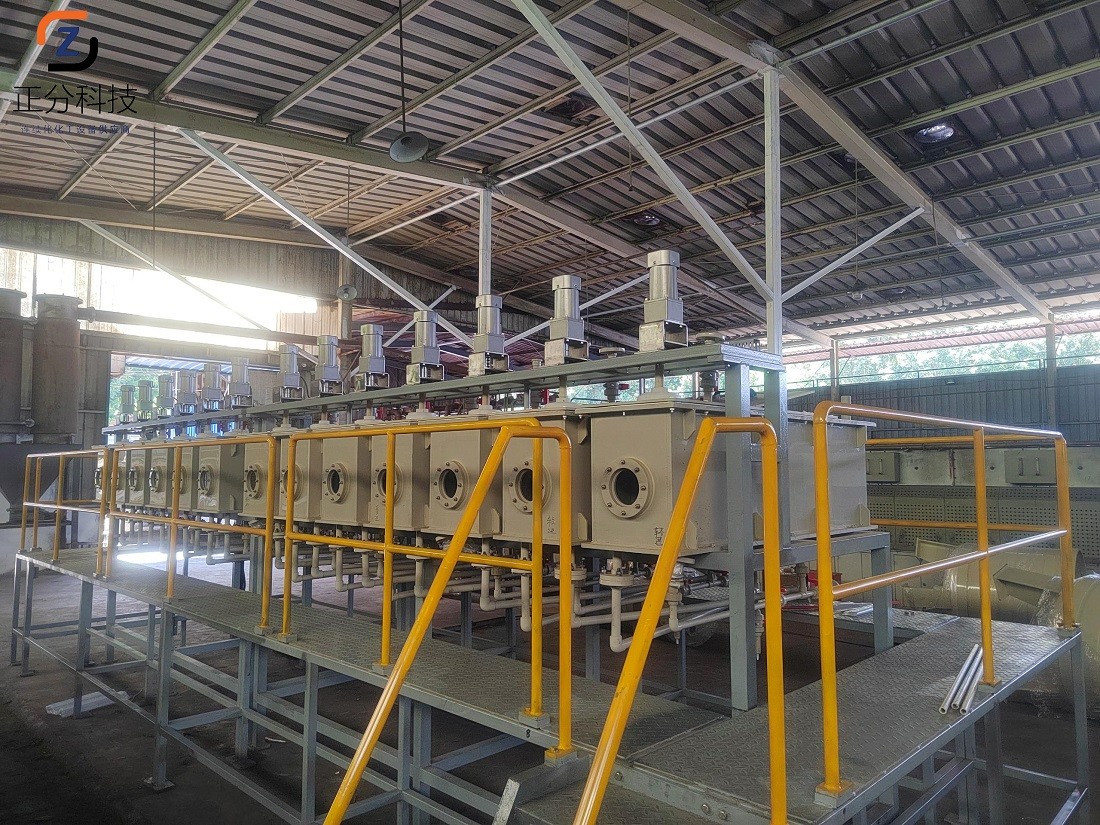
The core logic of copper extraction from copper nitrate wastewater using mixing-settling tanks involves leveraging the high selectivity of extractants for copper ions. Through a liquid-liquid mass transfer process, copper ions are transferred from the aqueous phase to the organic phase. Subsequently, the copper ions are stripped via a stripping process to achieve enrichment and recovery, while ensuring the wastewater meets environmental discharge standards. The entire process forms a closed-loop cycle with no secondary pollution. Its core process flow consists of 5 key links, each requiring strict parameter control to ensure extraction efficiency and system stability.
Pretreatment is a prerequisite for copper extraction using mixing-settling tanks. Its core purpose is to remove impurities from wastewater, optimize extraction conditions, and prevent reduced extraction efficiency, equipment blockage, or corrosion. First, copper nitrate wastewater is introduced into an adjustment tank to homogenize water quality and quantity, ensuring the stability of subsequent process parameters. Next, suspended solids and oil substances are removed through precision filtration to prevent emulsification during extraction and avoid contaminating the extractant. Finally, the wastewater pH is adjusted to a suitable range of 2.5-4.0 using an appropriate amount of alkali solution, ensuring copper ions remain in a stable ionic form and creating favorable conditions for subsequent extraction reactions. While pretreatment may seem simple, it directly determines extraction efficiency. Incomplete impurity removal can increase extractant loss and reduce copper extraction rates, requiring additional operation and maintenance costs later.
Extraction is the core of copper recovery. As the key equipment in this link, mixing-settling tanks typically adopt a multi-stage series mixing-settling structure, enabling precise separation and enrichment of copper ions. Pretreated wastewater and a specialized extractant (preferably oxime-based or chelating extractants, such as LIX984N) are introduced into the mixing chamber of the mixing-settling tank at a specific phase ratio (O/A ratio). Under mechanical stirring (80-120r/min, mixing time 3-5s), copper ions fully complex with the extractant and transfer from the aqueous phase to the organic phase.
The mixed liquid then flows into the settling chamber, where it naturally stratifies due to the density difference between the organic and aqueous phases. The settling time is controlled at 15-25min, and the interface position is adjusted via a weir plate to ensure effective phase separation. The upper layer is the loaded organic phase (rich in copper ions), and the lower layer is the raffinate (low-copper wastewater). A 3-5 stage countercurrent extraction design further improves copper recovery, reducing the copper concentration in wastewater to below 10mg/L. The single-stage extraction rate can reach over 92%, and the multi-stage series extraction rate can exceed 98%—far higher than traditional processes.
The core of the stripping operation is to remove copper ions from the loaded organic phase while regenerating the extractant, reducing process costs and forming a closed-loop cycle. The loaded organic phase enters a stripping tank (with the same structure as the mixing-settling tank, designed specifically for stripping) and contacts a stripping agent (usually 160-180g/L sulfuric acid solution) at a volume ratio of 1:4-1:6. The stripping temperature is controlled at 30-40℃, with a stirring speed of 100-140r/min, mixing time of 4-6s, and settling time of 10-15min.
In a strong acid environment, copper ions are stripped from the organic phase and enter the aqueous phase to form a high-concentration copper sulfate solution (copper concentration 30-50g/L), with a stripping rate of over 98%. After passing inspection, the regenerated organic phase (free of copper ions) is recycled back to the mixing-settling tank, achieving a recycling rate of over 98%. This significantly reduces extractant consumption, saving 80-120 yuan in extractant costs per ton of copper. A small amount of waste acid generated during stripping can be neutralized and reused in the leaching process, further reducing resource waste.
The high-concentration copper sulfate solution obtained from stripping can be further processed via electrolysis or crystallization to realize copper resource recycling. Electrolysis produces dense copper plates with a purity of ≥99.5%, which can be directly sold or reused in production, aligning with the concept of resource circularity. Crystallization produces copper sulfate crystals, widely used in the chemical, agricultural, and other industries, further enhancing enterprises’ economic benefits. After adopting this process, a Dalian thick copper plate factory processes 1200 tons of copper nitrate wastewater per month, achieving an additional annual income of over 6 million yuan with an investment payback period of only 8 months.
If the raffinate (low-copper wastewater) still contains trace copper ions or other pollutants after extraction, it requires advanced treatment such as neutralization precipitation and adsorption. This ensures the copper ion concentration meets relevant standards (e.g., the "Electroplating Pollutant Discharge Standard" (GB 21900-2008)) before discharge or reuse in production. This achieves an environmental closed-loop of "wastewater treatment - resource recovery - tail liquid reuse," completely solving the environmental disposal problem of copper nitrate wastewater and helping enterprises avoid environmental penalty risks.
Compared with traditional copper extraction processes (e.g., chemical precipitation, electrolysis) for copper nitrate wastewater, mixing-settling tank technology offers significant advantages in efficiency, cost, environmental protection, and adaptability, making it the preferred solution for enterprises generating copper nitrate wastewater. The specific advantages are as follows:
1. High Extraction Efficiency and Resource Recovery Rate: The multi-stage countercurrent extraction design achieves a copper recovery rate of over 98%—far higher than the 70%-80% of traditional chemical precipitation. It maximizes copper recovery from wastewater, reducing resource waste and increasing enterprises’ resource recovery income. For high-concentration copper nitrate wastewater, mixing-settling tanks enable rapid copper ion enrichment, significantly improving subsequent recovery efficiency and quality.
2. Strong Environmental Compliance and No Secondary Pollution: The entire process adopts a fully closed design, with closed-loop extraction, stripping, and tail gas absorption to eliminate gas leakage and extractant volatilization pollution. After advanced treatment, tail liquid can be discharged compliantly or reused, with no copper-containing sludge generated. This completely resolves the secondary pollution issue of traditional processes, helping enterprises easily pass environmental inspections and avoid penalty risks. After adopting this process, a Zhuhai HDI board factory reduced copper-containing wastewater discharge by 1200 tons per year and was commended by local environmental authorities.
3. Low Operation and Maintenance Costs and Wide Adaptability: Extractants can be recycled with a loss rate of less than 0.8%, significantly reducing chemical consumption costs. Mixing-settling tanks are made of acid-resistant and corrosion-resistant materials (e.g., PP, PVC, or FRP), with stirring paddles made of polyurethane or stainless steel—ensuring strong corrosion resistance, long equipment service life, and low continuous operation failure rates. Annual maintenance costs are 60% lower than traditional equipment. Additionally, mixing-settling tanks are highly adaptable, handling copper nitrate wastewater of varying concentrations and impurity levels. They can be flexibly adapted to small-scale wastewater from SMEs or large-scale continuous treatment needs of large enterprises via modular design, with a single system capable of processing thousands of cubic meters per day.
4. Easy Operation and Achievable Automatic Control: The mixing-settling tank process is mature and easy to operate. Online monitoring equipment can real-time track parameters such as tank liquid level, temperature, pH value, and copper ion concentration. Stirring speed, feeding rate, and extractant ratio can be adjusted in real time to achieve automatic control, reducing manual intervention, lowering labor costs, and ensuring stable process operation—avoiding the impact of human error on extraction efficiency.
While the mixing-settling tank process for copper extraction from copper nitrate wastewater is mature and reliable, improper parameter control or inadequate operation and maintenance can lead to issues such as reduced extraction rates, emulsification, and equipment corrosion—affecting process stability and extraction efficiency. Based on industry practical experience, the following core notes and common problem solutions are summarized to help enterprises standardize operations and improve process efficiency.
1. Extractant Selection and Ratio: Select an extractant with high selectivity for copper ions (e.g., LIX984N) based on the copper concentration and impurity content of the copper nitrate wastewater. Its extraction rate for impurities such as iron and zinc is less than 5%, enabling deep separation of copper and impurities. Adjust the extractant ratio according to the leachate copper concentration; the volume ratio of the organic phase (extractant + diluent) to the aqueous phase (leachate) is typically 1:1~1:2. Use 260# kerosene as the diluent to reduce extractant viscosity and improve mass transfer efficiency.
2. Precise Process Parameter Control: Control the extraction temperature at 25-35℃ (normal temperature operation, no additional heating required, reducing energy consumption). Strictly adhere to process requirements for stirring speed, mixing time, and settling time to avoid emulsification (from excessive stirring), insufficient mass transfer (from insufficient stirring), or incomplete phase separation (from insufficient settling time).
3. Regular Equipment Maintenance: Daily check the operation status of stirring devices to identify abnormal noise or leakage. Weekly clean sludge and impurities from the mixing and settling chambers to prevent blockages at feed and discharge ports. Monthly inspect the integrity of the equipment corrosion-resistant layer and repair damaged areas promptly to prevent corrosion and extend equipment service life.
4. Extractant Maintenance: Regularly test the concentration and purity of the organic phase, supplement fresh extractant as needed, and regenerate aged or ineffective extractant to avoid reduced copper extraction rates due to degraded extractant performance.
1. Reduced Extraction Rate: Core causes include insufficient extractant concentration, excessive impurities, and parameter deviations. Solutions: Supplement fresh extractant and improve its purity; optimize pretreatment to completely remove wastewater impurities; recalibrate process parameters (stirring speed, phase ratio, temperature) to ensure sufficient extraction reactions.
2. Emulsification: Mostly caused by excessive suspended solids/oil impurities in wastewater or excessive stirring speed. Solutions: Strengthen pretreatment with additional filtration to remove impurities; reduce stirring speed or add a small amount of demulsifier (e.g., aluminum sulfate) to the mixing chamber to accelerate phase separation.
3. Equipment Corrosion: Mainly caused by excessively acidic wastewater or damaged corrosion-resistant layers. Solutions: Strictly control wastewater pH to avoid excessive acidity; regularly inspect and repair the corrosion-resistant layer, and select more corrosion-resistant equipment materials.
4. Poor Stripping Effect: Mostly caused by insufficient stripping agent concentration or low stripping temperature. Solutions: Adjust the stripping agent concentration to the standard range, increase the stripping temperature, and extend mixing time to ensure complete copper ion stripping.
With increasingly strict national environmental protection policies—such as the "14th Five-Year Plan for Modern Energy System" and the "Implementation Plan for Industrial Wastewater Recycling"—there is a clear requirement to strengthen industrial wastewater recycling and strictly control heavy metal pollution. As a key link with both environmental and economic benefits, copper extraction from copper nitrate wastewater has seen growing market demand. As the core equipment for this process, mixing-settling tanks have been widely used in electroplating, PCB, semiconductor, and hardware processing industries due to their high efficiency, environmental friendliness, and low cost—becoming a key enabler of enterprise green transformation.
In the future, mixing-settling tank technology for copper extraction from copper nitrate wastewater will be upgraded in three directions: 1) Intelligent upgrading: Integrate the Internet of Things (IoT) and big data technologies to realize real-time parameter monitoring, automatic adjustment, and fault early warning—further reducing labor costs and improving process stability. 2) Process optimization: Enhance extraction rates and extractant recycling rates by improving extractant performance and optimizing mixing-settling tank structures, reducing operation and maintenance costs. 3) Multi-resource collaborative recovery: Leverage the separation advantages of mixing-settling tanks to achieve the simultaneous recovery of multiple components (e.g., copper, nitrates) from copper nitrate wastewater—further improving resource utilization value and promoting a triple win for "environmental compliance, resource recycling, and economic benefits" in the industry.
In summary, mixing-settling tank technology for copper extraction from copper nitrate wastewater effectively addresses the industry’s core pain points of low extraction rates, high environmental risks, and high operation and maintenance costs. It not only enables efficient copper resource recovery and recycling but also helps enterprises meet environmental compliance requirements, balancing economic and social benefits. For enterprises generating copper nitrate wastewater, adopting mixing-settling tank technology not only reduces environmental disposal costs and penalty risks but also creates additional income through copper resource recovery—making it one of the optimal paths for enterprises to achieve high-quality, green development.
Focus on being Continuous chemical equipment
provider.
If you want to learn more about our centrifugal extractor, mixer settler, Contact us Now