
Continuous chemical equipment
provider
provider


In the hydrometallurgical process of copper production, mixed-settler extractors—core equipment for separating and enriching copper ions—directly determine copper recovery rates, production costs, and environmental compliance standards. The industry currently faces a prominent core pain point: prioritizing production efficiency often leads to increased extractant loss and excessive wastewater discharge, while overemphasizing environmental governance raises costs and reduces production capacity. Neglecting safety control may trigger equipment corrosion, leakage, and other safety accidents. How to resolve the contradiction of "efficiency compromise leads to environmental non-compliance; safety prioritization reduces efficiency" and achieve symbiosis among the three has become an urgent demand for the high-quality development of copper production enterprises. Combining the actual application scenarios of mixed-settler extractors in copper production, this article dissects the core essentials of efficiency improvement, environmental compliance, and safety prevention, proposes implementable pathways for synergistic balance, and provides practical references for industry operations.
As the core hub of the closed-loop "leaching-extraction-stripping-electrowinning" process in copper hydrometallurgy, mixed-settler extractors (also known as extraction tanks) leverage liquid-liquid extraction principles to precisely transfer copper ions from copper-containing leachate to the organic phase, then strip the copper ions via stripping processes to provide high-purity copper-rich solutions for subsequent electrowinning. Without high temperature and high pressure, this process aligns with the green metallurgy development trend and is widely applied in three core scenarios: low-grade copper ore development, smelting waste recycling, and electroplating wastewater resource utilization.
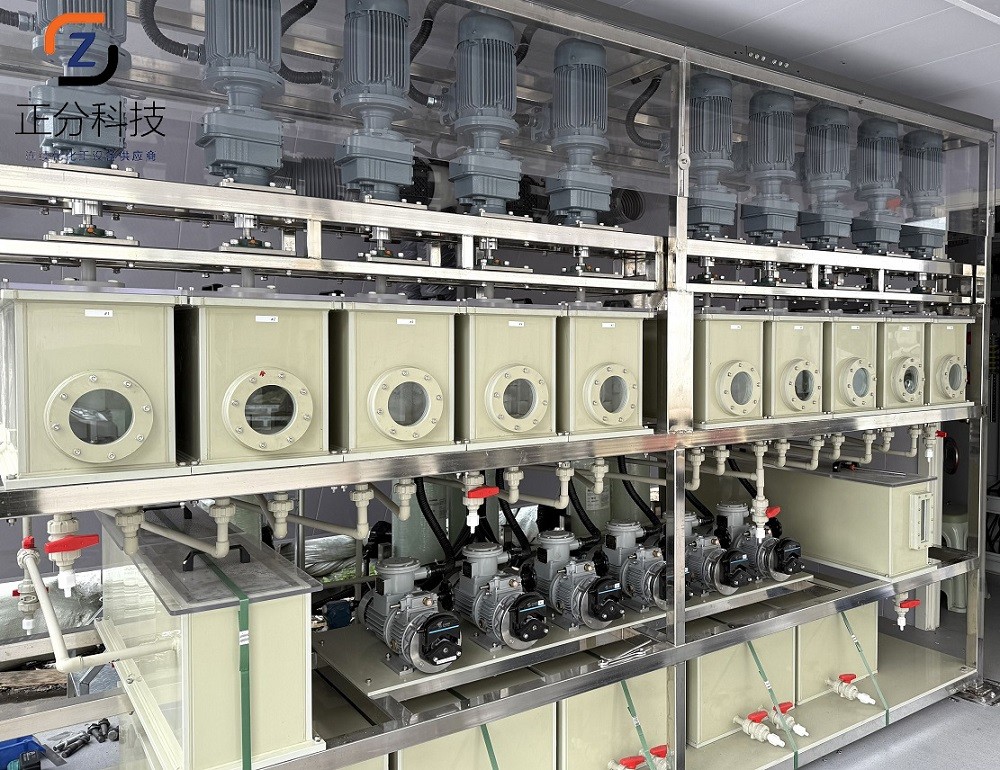
As one of the earliest industrial extraction equipment, mixed-settler extractors support single-stage operation or multi-stage series/parallel operation. They fully mix two phases through stirring and complete phase separation by gravity, featuring high stage efficiency and strong adaptability—making them the most commonly used extraction equipment in current copper hydrometallurgy.
In low-grade copper oxide ore extraction, mixed-settler extractors can raise copper recovery rates from below 80% in traditional processes to over 95%, solving the problem of low resource utilization of low-grade ores. In smelting waste recycling, they achieve copper recovery exceeding 99% by precisely separating copper from impurities such as iron and arsenic, while reducing harmful gas emissions. In electroplating wastewater treatment, they reduce copper concentration in wastewater to below 0.009g/L, meeting the GB 25467-2010 emission standards and achieving a win-win situation of "wastewater resource utilization" and environmental compliance.
Its application value lies not only in improving copper production efficiency and reducing resource waste but also in building a bridge between "efficient production-resource circulation-environmental control"—a core support for the green and large-scale transformation of the copper industry, especially fully exerting its flexible combination and easy scaling advantages in low-grade ore development and wastewater resource utilization.
Some enterprises adopt methods such as increasing extractant concentration, raising stirring speed, and shortening phase separation time to improve copper recovery and accelerate production progress. Although this can increase single-stage extraction efficiency in the short term, it leads to a rise in emulsification entrainment rate of extractants (up to more than 5%), resulting in reagent waste, increased production costs, and excessive copper ion concentration in raffinate—further increasing wastewater treatment pressure and emission violation risks.
Conversely, excessive control of extractant dosage and extended phase separation time to reduce wastewater discharge leads to decreased copper recovery and prolonged production cycles, with capacity utilization below 70%, creating a sharp contradiction with the industry's demand for cost reduction and efficiency improvement. In addition, traditional UPVC material mixed-settler extractors are prone to erosion in high-acid environments, causing swelling, deformation, and corrosion perforation, leading to copper liquid leakage—affecting production efficiency and causing environmental pollution. It should be noted that excessive stirring of mixed-settler extractors results in excessively small dispersed liquid droplets, leading to phase separation difficulties or even emulsification, further exacerbating the imbalance between environmental protection and efficiency.
The stirring speed, phase ratio (ratio of organic to aqueous phase), temperature, and other parameters of mixed-settler extractors directly affect production efficiency, but improper parameter regulation easily triggers potential safety hazards. For example, excessively high stirring speed causes abnormal pressure in the tank, increasing the risk of organic phase leakage. Leaked extractants are flammable and volatile, easily leading to fires and personnel poisoning accidents. Some enterprises omit regular equipment inspection to shorten production cycles, failing to detect equipment corrosion, stirring device failure, and other problems of mixed-settler extractors in a timely manner. A case occurred where 80% of electrolytic cells in a hydrometallurgical plant in Zambia were corroded and perforated, causing production interruptions and safety risks of copper liquid leakage.
Meanwhile, the extraction process involves dangerous media such as strong acids and extractants. Inadequate safety protection measures may lead to personnel burns, poisoning, and other safety accidents. In addition, multi-stage series operation of mixed-settler extractors involves a large amount of material retention. Once a leakage occurs, the impact scope of the accident expands, further highlighting the contradiction between efficiency and safety.
In environmental governance, some enterprises' wastewater treatment processes are poorly connected with the safe operation of mixed-settler extractors. For example, incomplete water quality filtration during wastewater recycling leads to impurities entering the mixed-settler extractors, accelerating equipment corrosion and increasing safety hazards. Moreover, the unreasonable installation location of some safety protection facilities (such as emergency spray devices) cannot effectively respond to emergencies such as extractant leakage and acid splash, and may also affect wastewater collection and treatment efficiency.
In addition, in the extractant recovery process, an open recovery process not only causes air pollution due to extractant volatilization but also increases the risk of fires and personnel poisoning, forming a dilemma of "disconnection between environmental governance and safety prevention". Due to the large floor area of mixed-settler extractors, unreasonable equipment layout may lead to insufficient coverage of safety protection facilities, further exacerbating the disconnection between environmental protection and safety.
Optimizing extraction processes according to raw material characteristics to achieve precise matching of efficiency and environmental protection is the core of balancing the three. For different raw material types, differentiated process schemes are adopted:
For complex system leachate with high iron, high calcium-magnesium, etc., a "three-stage extraction + two-stage washing + three-stage stripping" process is combined with special extractants such as Mextral5640H. The extractant concentration is controlled at 25%, and the sulfuric acid concentration for stripping is 180-220g/L. The copper recovery rate can be increased to 99.5%. Meanwhile, through an online pH adjustment system (controlling the range of 1.8-2.2) and high-efficiency impurity removal pretreatment, the acid hydrolysis failure of extractants is solved, the emulsification entrainment rate is reduced to below 1%, and reagent waste and wastewater pollution are reduced.
For low-impurity raw materials, a cost-effective "two-stage extraction + one-stage washing + two-stage stripping" scheme is adopted. The equipment investment is 28% lower than that of the three-stage process, and the power consumption per ton of copper is controlled within 75kW·h, balancing efficiency and cost.
For low-acid, low-impurity raw materials, a simplified "two-stage extraction + two-stage stripping" process without washing steps reduces water consumption by 30%, achieving a win-win situation of high efficiency and environmental protection.
Combined with the fluid mechanics characteristics of mixed-settler extractors, the mass transfer efficiency can be further improved by optimizing stirring speed and droplet diameter distribution, avoiding emulsification, and achieving the synergistic optimization of efficiency and environmental protection.
Meanwhile, the operating parameters of mixed-settler extractors are optimized: stirring speed is controlled at 300-350rpm, and phase separation time is 4-5 minutes. This prevents emulsification caused by excessively high speed and affects mass transfer efficiency due to excessively low speed, ensuring precise and efficient separation of copper ions, reducing residual copper ion concentration in raffinate, and lowering wastewater treatment pressure from the source. This parameter setting can effectively control the dispersed phase droplet diameter at 50-200μm, ensuring sufficient mass transfer and avoiding phase separation difficulties—consistent with the operating characteristics of mixed-settler extractors.
Equipment upgrading is the foundation for achieving balance among the three, focusing on solving the pain points of corrosion and leakage of traditional mixed-settler extractors.
Traditional UPVC materials are replaced with 316L stainless steel + fluoroplastic composite materials. The service life in a strong acid environment with pH=0 is extended to more than 8 years—3 times longer than traditional materials—reducing copper liquid leakage, environmental pollution, and safety accidents caused by equipment corrosion and perforation.
The structure of mixed-settler extractors is optimized: an overhead stirring structure is adopted to eliminate the bottom bearing design, fundamentally solving the liquid leakage hazard. The equipment failure rate for continuous operation is reduced by 50%. Meanwhile, the mass transfer interface is expanded, and liquid droplets are crushed to 50-200μm, increasing mass transfer efficiency by 10 times and balancing efficiency and safety. Drawing on the design concept of a chamberless mixed-settler extractor, the installation position of the stirring paddle is optimized to avoid fluid short-circuiting, further improving the stability of equipment operation.
A comprehensive environmental protection support system is built to achieve closed-loop governance of the extraction process:
A closed extractant recovery system is established, and condensation recovery technology is used to control the extractant volatilization loss rate below 0.8% and the recycling rate to over 98%. This not only reduces reagent waste but also avoids air pollution caused by volatilization.
A deep treatment system for raffinate is built. The copper concentration in raffinate is reduced to below 0.15g/L through processes such as ion exchange and membrane separation, and the treated wastewater is recycled for the leaching process to achieve "zero discharge" targets.
An acid mist absorption tower is installed, adopting two-stage alkali spray with absorption efficiency ≥95%, reducing the harm of strong acid mist to equipment and personnel, and achieving the synergistic prevention and control of environmental protection and safety.
Given the large floor area of mixed-settler extractors, equipment layout can be optimized to achieve efficient connection between environmental protection facilities and production equipment, improving governance efficiency.
In accordance with the "Copper Smelting Safety Production Specifications" and relevant requirements of the Ministry of Emergency Management, a full-process safety control system of "prevention in advance, control during operation, and disposal after incidents" is constructed to prevent safety accidents from affecting production efficiency and environmental governance.
In advance: Regular inspections are conducted on mixed-settler extractor equipment, focusing on checking corrosion status, stirring devices, sealing performance, etc. Worn parts are compulsorily replaced every 2 years, and shortened to 1 year when there are corrosive media. Operators receive professional training, focusing on the characteristics of dangerous media such as extractants and strong acids, as well as emergency response procedures, and are allowed to take up their posts only after passing the assessment. Considering the characteristics of multi-stage series connection and large material retention of mixed-settler extractors, equipment linkage inspection needs to be strengthened to avoid single-point failures causing chain accidents.
During operation: Comprehensive safety protection facilities are installed in the operating area of mixed-settler extractors: leakage detectors and emergency shutdown system interlocks are installed; eye washers and emergency shower devices are equipped; the reserve of acid-base neutralizers meets 3 times the maximum leakage demand.
A PLC/DCS intelligent control system is used to real-time monitor parameters such as stirring speed, phase ratio, pH value, and temperature. The fluctuation range of copper concentration is compressed from ±5% to ±0.5%. In case of parameter abnormalities or leakage, the machine automatically shuts down immediately to avoid accident expansion. Operators wear positive pressure air respirators, use lighting with ≤12V safe voltage, and the single operation time does not exceed 2 hours. Continuous operation is rotated every 30 minutes. Considering the large operating area of mixed-settler extractors, safety protection facilities need to be reasonably arranged to achieve full coverage and no dead ends.
After incidents: A comprehensive emergency response plan is formulated to clarify disposal procedures and responsibility division for emergencies such as extractant leakage, acid splash, and fires, and emergency drills are carried out regularly. An accident pool is set up to collect leaked copper liquid, acid liquid, and wastewater to avoid soil and water source pollution, ensuring no secondary environmental problems during accident disposal. Considering the large material retention of mixed-settler extractors, the emergency response plan needs to focus on strengthening the collection and treatment of leaked materials to reduce accident impacts.
Intelligent upgrading of mixed-settler extractors is promoted, and a digital management platform is built to achieve real-time monitoring and dynamic optimization of efficiency, environmental protection, and safety.
Sensors are used to real-time collect operating parameters of mixed-settler extractors, wastewater discharge indicators, safety protection status, and other data, which are uploaded to the management platform for data visualization monitoring. Problems such as parameter abnormalities, equipment failures, and environmental non-compliance are detected in a timely manner to achieve early detection and handling.
Big data analysis technology is introduced to optimize process parameters. According to changes in raw material composition and production demand, stirring speed, extractant dosage, and other parameters are automatically adjusted to achieve dynamic balance of maximum efficiency, environmental compliance, and safety.
Digital twin technology is introduced to simulate the operating scenarios of mixed-settler extractors, predict potential safety and environmental risks in advance, optimize equipment layout and process flow, reduce trial-and-error costs, and improve production stability.
A hydrometallurgical plant in Yunnan, facing the demand for treating high-copper copper concentrates, adopted modified mixed-settler extractors equipped with Mextral5640H extractants and optimized the "three-stage extraction + two-stage washing + three-stage stripping" process. The phase ratio O/A was controlled at 2:1 (first stage), 1.8:1 (second stage), and 1.5:1 (third stage). This achieved a breakthrough in the copper-iron separation coefficient of 2500, with the total copper recovery rate reaching 99.5% and the iron removal rate at 92%. The copper concentration in raffinate was reduced to below 0.15g/L, meeting environmental emission standards.
Meanwhile, 316L stainless steel + fluoroplastic composite material mixed-settler extractors were used, equipped with PLC intelligent temperature control and leakage detection systems. The equipment failure rate for continuous operation was reduced by 60%, the annual extractant loss was reduced by 1.2 tons, and the power consumption per ton of copper was controlled within 70kW·h. The synergistic improvement of efficiency, environmental protection, and safety was realized. This case fully exerted the advantages of high stage efficiency and strong adaptability of mixed-settler extractors, and achieved balance among the three through process optimization and equipment upgrading.
An electroplating enterprise in Shandong adopted multi-stage mixed-settler extractors to treat copper nitrate wastewater, using LIX984 as the extractant, with a controlled phase ratio O/A of 1.2:1 and stirring speed of 300rpm. The copper recovery rate was increased to 98%, and the copper concentration in wastewater was reduced to below 0.3g/L. While meeting discharge standards, copper resource recovery was realized. Through the construction of a closed extractant recovery system and an intelligent safety monitoring platform, the recycling rate of extractants reached 98.5%, and no safety accidents occurred. A virtuous cycle of "resource recovery-environmental compliance-safety production" was achieved. Relying on the characteristic of easy multi-stage series connection of mixed-settler extractors, this case realized wastewater resource treatment, providing a reference for similar enterprises.
From industry practices, balancing efficiency, environmental protection, and safety in the application of mixed-settler extractors in copper production lies in "process adaptation, equipment upgrading, control implementation, and intelligent empowerment": process parameters should be optimized according to raw material characteristics to avoid one-sided pursuit of efficiency; equipment upgrading and environmental governance linkage should be adopted to strengthen environmental protection and safety defenses; and intelligent management should be introduced to realize dynamic synergy of the three. At the same time, full play should be given to the characteristics of mixed-settler extractors such as large floor area, large material retention, and high stage efficiency by optimizing equipment layout and control schemes to exert the core advantages of the equipment.
With the continuous advancement of the green, large-scale, and intelligent transformation of the copper industry, the application level of mixed-settler extractors—as core equipment of copper hydrometallurgy—is directly related to the core competitiveness and sustainable development capabilities of enterprises. Efficiency is the core goal of enterprise development, environmental protection is the bottom line requirement for enterprise survival, and safety is the prerequisite for enterprise production. The three are not mutually exclusive but can achieve symbiosis through scientific process optimization, equipment upgrading, control implementation, and intelligent empowerment.
As an indispensable equipment in hydrometallurgy, mixed-settler extractors play an increasingly important role in the green transformation of copper production. The technical optimization and application upgrading of mixed-settler extractors are key grips to promote the high-quality development of the copper industry.
In the future, copper production enterprises should abandon the "single-oriented" development concept, focus on the core pain points of mixed-settler extractor application, formulate personalized balance schemes according to their own production scale and raw material characteristics, continuously optimize process parameters, upgrade equipment and facilities, strengthen safety control, and promote intelligent transformation. Let mixed-settler extractors realize environmental compliance and safety control while improving copper production
Focus on being Continuous chemical equipment
provider.
If you want to learn more about our centrifugal extractor, mixer settler, Contact us Now