
Continuous chemical equipment
provider
provider


With the rapid iteration of the new energy vehicle and energy storage industries, the recycling and reuse of retired power batteries has become a key track to solve resource shortages and practice green development. Currently, the battery recycling industry generally faces a core pain point: the leachate of waste batteries contains a wide variety of impurities (such as metal impurities like iron, aluminum, copper, magnesium, as well as organic toxins and physical residues), which are difficult to separate. If not properly controlled, it will lead to a decrease in the recovery rate of valuable metals (lithium, nickel, cobalt), failure of recycled materials to meet the purity requirements for power battery reuse, and an increase in environmental treatment costs and equipment corrosion risks. As the core equipment for "separation and purification" in wet battery recycling, the extraction tank achieves precise interception, targeted separation and efficient control of various impurities through an integrated design of process optimization, parameter coordination and equipment adaptation, becoming a core support for solving the industry's impurity problems and improving recycling efficiency. This article will comprehensively analyze the core role of extraction tanks in battery recycling impurity control from the perspectives of impurity control pain points, core logic of synergistic control, key technical paths and industrial application practices, providing practical references for industrial technological upgrading.
I. Core Types and Control Difficulties of Impurities in Battery Recycling
After crushing and acid leaching of waste power batteries (especially ternary batteries and lithium iron phosphate batteries), the impurity components in the leachate are complex and diverse. According to their properties, they can be divided into three categories. Their control difficulties directly determine the synergistic control logic of the extraction tank and are also the technical bottlenecks that the industry urgently needs to break through.
(1) Core Impurity Types and Hazards
1. Metal impurities: mainly include iron, aluminum, copper, magnesium, calcium, etc. Among them, iron and aluminum are the most common and influential impurities—iron ions are prone to react with extractants, reducing extractant activity and causing emulsification, leading to a decrease in the separation efficiency of valuable metals; aluminum ions will form hydroxide precipitates, blocking the channels of the extraction tank and increasing equipment maintenance costs; impurities such as copper and magnesium will mix into recycled metal products, resulting in substandard product purity and inability to be used in the preparation of power battery cathode materials.
2. Organic impurities: mainly derived from battery electrolyte decomposition products (such as HF and phosphorous fluoride produced by the decomposition of lithium hexafluorophosphate) and residual electrode binders. These impurities will poison the extractant, shorten the service life of the extractant, corrode the extraction tank equipment, and may also cause emulsification of the organic phase, destroying the mass transfer balance between the liquid phases.
3. Physical impurities: including aluminum-copper foil fragments remaining from electrode sheet crushing, diaphragm PET debris, carbon powder, etc. These impurities have small particle sizes (0.5-2mm), which are easy to block the channels of the mixing chamber and clarification chamber of the extraction tank, hinder the contact mass transfer between liquid phases, and even cause equipment short-circuit risks.
(2) Core Difficulties in Industrial Control
First, the strong synergistic interference of impurities: multiple impurities coexist in the leachate, and some impurities (such as nickel, cobalt, manganese) have similar ionic radii. Traditional separation processes are difficult to achieve precise separation, which is prone to "incomplete separation and cross-contamination" problems; second, poor system stability: fluctuations in the pH value and temperature of the acid leachate, as well as changes in impurity concentration, are likely to cause emulsification, phase entrainment and other phenomena in the extraction tank, affecting the impurity control effect; third, the contradiction between economy and efficiency: excessive pursuit of impurity removal accuracy will increase extractant consumption and extend the process cycle, while reducing control standards will affect product quality. How to achieve the balance between "efficient impurity removal and low-cost operation" has become the core demand of the industry.
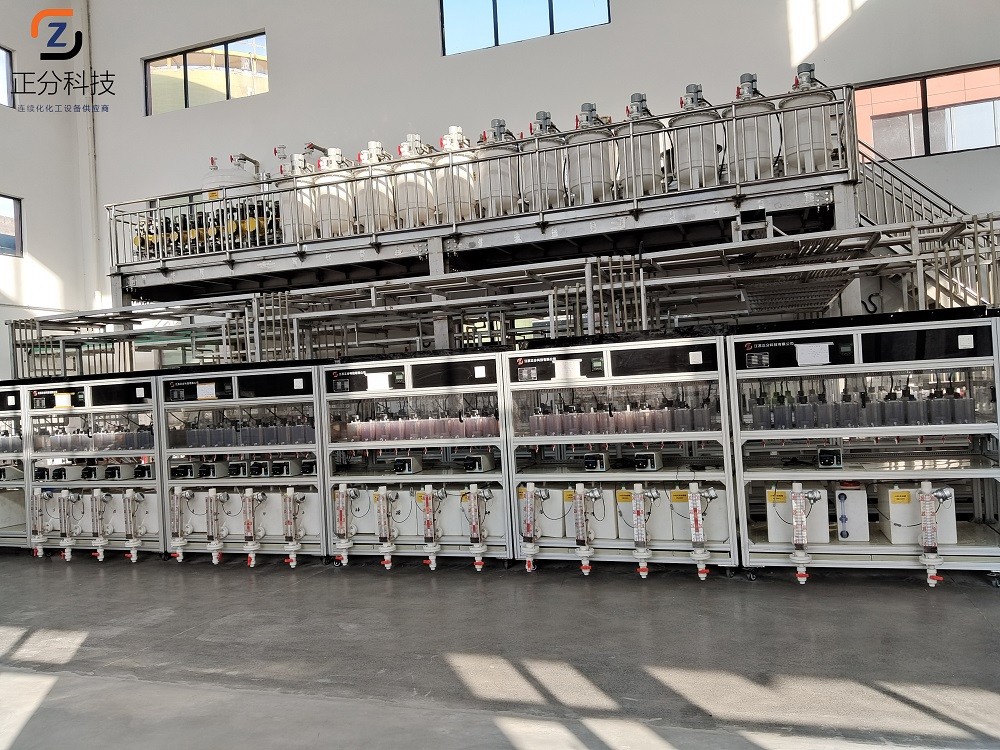
II. Core Logic and Underlying Principles of Synergistic Impurity Control in Extraction Tanks
The core of synergistic impurity control in the extraction tank revolves around the three logics of "targeted separation, full-process adaptation and closed-loop regulation". Relying on the full-process optimization of "mixing-mass transfer-phase separation", it realizes hierarchical control of different types of impurities—not only designing exclusive removal paths for the characteristics of a single impurity, but also avoiding cross-interference of impurities through the coordinated cooperation of process parameters, equipment structure and auxiliary systems, while ensuring the efficient recovery of valuable metals, and ultimately achieving the goal of "precise impurity removal, controllable energy consumption and up-to-standard products".
Its underlying principle is: using the difference in distribution coefficients of different substances between the organic phase and the aqueous phase, through the selective effect of the extractant, valuable metals are preferentially entered into the organic phase, while various impurities are retained in the aqueous phase or directionally removed through auxiliary means; at the same time, by optimizing the structural design and operating parameters of the extraction tank, the mass transfer efficiency between liquid phases is enhanced, emulsification, phase entrainment and other problems are suppressed, ensuring the stable and efficient process of impurity separation, and forming a full-process synergistic impurity control system of "pretreatment-extraction-washing-stripping".
III. Key Technical Paths for Synergistic Impurity Control in Extraction Tanks
The synergistic control of impurities by the extraction tank is not the optimization of a single link, but the integrated coordination of equipment structure, process parameters, extraction system and auxiliary system. Specifically, it can be divided into four core technical paths, covering the whole process of impurity removal from pretreatment to final removal.
(1) Pretreatment Coordination: Reducing Impurity Interference from the Source and Lowering Extraction Load
The core of impurity control is "source reduction". The synergistic control of the extraction tank needs to start from the front-end pretreatment link, link with crushing, sorting and acid leaching processes, reduce the total amount of impurities entering the extraction system, and lay the foundation for subsequent extraction and impurity removal.
In practical applications, the extraction tank system is coordinately adapted to the front-end pretreatment process: nitrogen-protected crushing technology is adopted to crush the battery pack into particles below 5mm, and at the same time, the combined process of magnetic separation-gravity separation-eddy current separation is used to separate physical impurities such as aluminum-copper foil fragments and carbon powder in advance, with a removal rate of more than 99%, avoiding physical impurities blocking the channels of the extraction tank; in the acid leaching link, by controlling the sulfuric acid concentration (2.0mol/L), temperature (85℃) and liquid-solid ratio (4:1), the efficient leaching of valuable metals is achieved, while the leaching amount of impurities such as iron and aluminum is reduced. At the same time, pyrite layered roasting technology is adopted to reduce the amount of water leaching residue, reducing the subsequent extraction load by more than 60%. In addition, by adjusting the pH value of the acid leachate, some metal impurities (such as iron and aluminum) form hydroxide precipitates, which are removed in advance before entering the extraction tank, further improving the impurity removal efficiency.
(2) Extraction System Coordination: Targeted Selection to Improve Impurity Separation Accuracy
The selection and ratio of extractants are the core of the extraction tank to achieve precise impurity separation. It is necessary to build an "exclusive extraction system" according to the type of impurities in the leachate and the type of valuable metals, so as to achieve the synergistic effect of "efficient extraction of valuable metals and precise interception of impurities".
According to the characteristics of different impurities, the extraction tank adopts differential extraction system for synergistic control: for common metal impurities such as iron and aluminum, a system composed of P204 extractant and kerosene is selected. Under the condition of pH=3.5, valuable metals such as cobalt are preferentially extracted, and the interception rate of iron and aluminum impurities is controlled below 0.5%; for nickel-manganese separation, saponified P507 extractant is adopted to extract nickel under the condition of pH=5.0, leaving manganese in the aqueous phase with a separation factor of more than 500; for magnesium impurities in the lithium purification process, a TBP-FeCl₃ synergistic extraction system is adopted to form complexes under the condition of pH=1.8, with the magnesium-lithium separation factor exceeding 1200, ensuring that the lithium purity meets the standard. At the same time, by optimizing the extractant ratio and adding an appropriate amount of synergist (such as sucrose), the stability of the extraction system is improved, avoiding the decrease in impurity removal efficiency caused by low temperature environment (below 10℃), and ensuring that the extraction system can achieve precise impurity control under different working conditions.
(4) Operating Parameter Coordination: Dynamic Regulation to Ensure Impurity Removal Stability
The operating parameters of the extraction tank (pH value, temperature, flow rate, stirring speed) directly affect the impurity separation effect. Dynamic regulation is needed to achieve parameter coordination, ensuring that the impurity removal standard can be stably met under different impurity concentrations and feed liquid characteristics, while taking into account the recovery rate of valuable metals.
The key parameter coordination and regulation logic is as follows: first, pH value coordination. According to the needs of different extraction stages, dynamically adjust the pH value of the feed liquid. For example, control pH=3.5 when extracting cobalt and pH=5.0 when extracting nickel, ensuring the selectivity of the extractant for valuable metals and inhibiting impurity extraction; second, temperature and stirring speed coordination. Control the extraction temperature at 25-35℃ and adjust the stirring power density to 0.8~1.5kW/m³, avoiding insufficient mass transfer caused by insufficient stirring or emulsification caused by excessive stirring, ensuring full contact between liquid phases and improving impurity separation efficiency; third, flow rate coordination. Automatically adjust the flow rates of extractant and feed liquid through the PLC control system with a precision of ±0.5%, keeping the ratio of organic phase to aqueous phase stable and avoiding incomplete impurity separation caused by flow rate fluctuations; fourth, stripping parameter coordination. Use 4mol/L sulfuric acid solution for pulse stripping of the loaded organic phase, so that the recycling rate of the extractant reaches more than 98%, and reduce the impurity interference caused by extractant loss.
Conclusion
In the process of battery recycling and reuse, the accuracy of impurity control directly determines the value of recycled products and the sustainable development of the industry. As the core separation equipment, the extraction tank effectively solves the core pain points of the industry such as impurity interference, incomplete separation and high cost through the full-process coordination of pretreatment, extraction system, equipment structure and operating parameters, achieving the dual goals of "precise impurity control and efficient recovery of valuable metals". In the future, with the continuous iteration of technology, the synergistic impurity removal capacity of the extraction tank will be further improved, which will not only promote the transformation of the battery recycling industry towards high-quality development, but also provide a green and efficient Chinese solution for global lithium resource development, helping to achieve the "dual carbon" goal.
Focus on being Continuous chemical equipment
provider.
If you want to learn more about our centrifugal extractor, mixer settler, Contact us Now